
11 Things Air Cooler Manufacturers Don’t Tell You About Honeycomb Cooling Pads
Novamax Best Air Cooler is designed to bring powerful cooling to your home during the hottest days. This high-performance Cooler circulates cool air efficiently, helping maintain a comfortable indoor temperature even when the heat is unbearable. Built for dura...
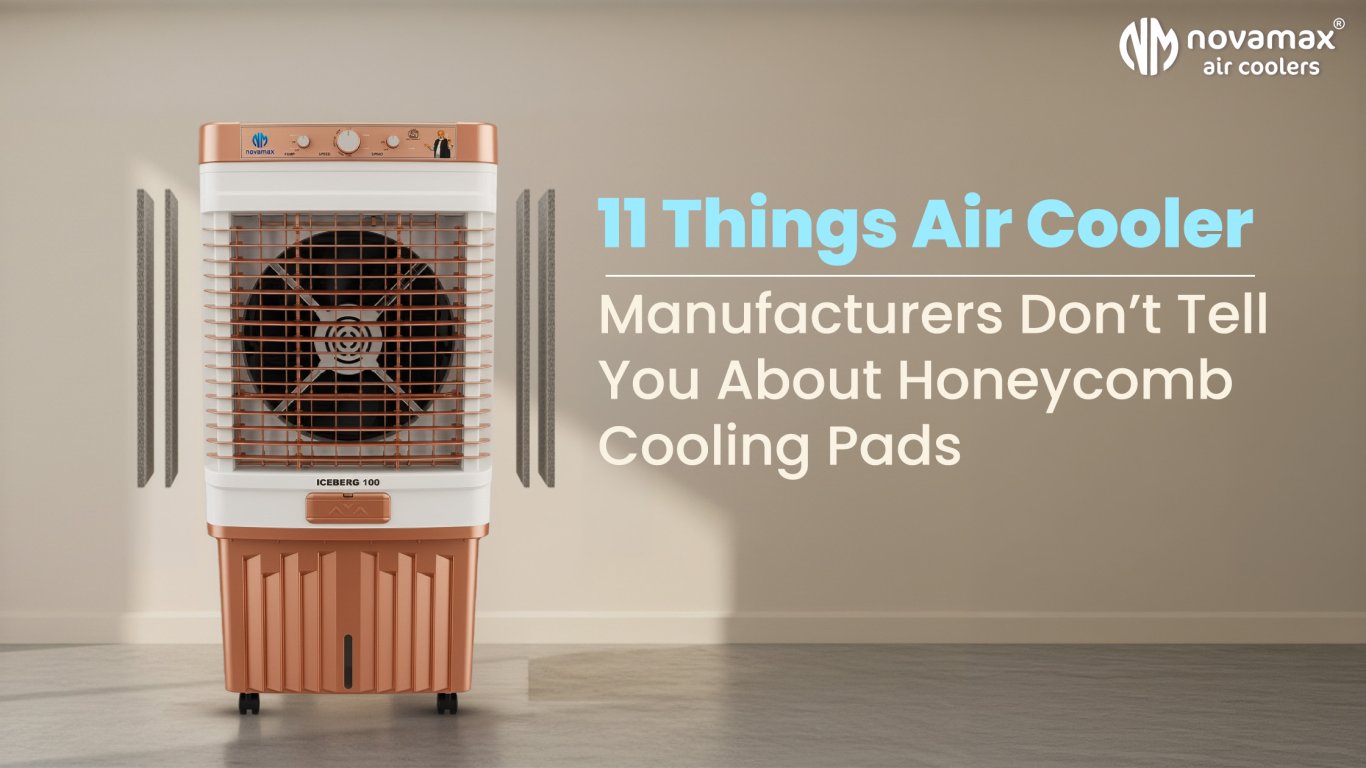
Honeycomb cooling pads are everywhere today. Walk into any showroom, scroll through any product listing, or talk to any dealer, and you’ll hear the same line:
What doesn’t get discussed as openly is why honeycomb pads became the industry standard, where they genuinely shine, and where they quietly struggle.
After years of working closely with Air Cooler Manufacturers, distributors, and service teams across India, certain patterns keep repeating. These aren’t things written on cartons or highlighted in ads—but they matter if you care about real cooling performance and long-term value.
Let’s lift the curtain.
1. Not All Honeycomb Pads Are Actually the Same
This is the first and biggest truth most Air Cooler Manufacturers don’t emphasize.
From the outside, honeycomb pads look identical. Inside factories, however, there’s a massive difference between:
-
Low-density paper pads
-
High-density cellulose pads
-
Resin-coated vs non-coated pads
Some pads absorb water evenly and last for years. Others look premium on day one and start breaking down within a single harsh summer.
Best Air Cooler Manufacturers invest heavily in pad quality testing—water retention, airflow resistance, and structural integrity. Brands that cut corners often rely on visual similarity, assuming customers won’t notice the difference immediately.
They do—usually in peak May heat.
2. Thicker Pads Don’t Automatically Mean Better Cooling
There’s a common belief that thicker honeycomb pads = more cooling.
That’s only partially true.
Cooling efficiency depends on:
-
Pad thickness
-
Air velocity
-
Fan capacity
-
Cabinet design
A thick pad with poor airflow can actually reduce cooling by choking air movement. This is why experienced Air Cooler Manufacturers in India match pad thickness carefully with motor power and fan design.
When cooling feels weak despite “big honeycomb pads,” the issue isn’t the concept—it’s the mismatch.
3. Honeycomb Pads Still Need Maintenance (Just Less Obvious)
One myth that quietly circulates is that honeycomb pads are “maintenance-free.”
They’re not.
What they are is lower-maintenance compared to grass pads.
Dust, minerals, and hard water residue slowly build up inside the pad cells. Over time, this affects:
-
Airflow
-
Cooling efficiency
-
Odor
Service teams working with Best Air Cooler Manufacturers often see performance drop not because pads are bad—but because users never flush or clean them.
Manufacturers know this. They just don’t want to scare customers with maintenance talk.
4. Water Quality Matters More Than Most People Think
In many parts of India, groundwater is hard—loaded with minerals.
Honeycomb pads exposed to hard water:
-
Develop white scaling
-
Lose absorption capacity
-
Become brittle faster
This is a known challenge for every Air Cooler Manufacturer in India, especially in Rajasthan, MP, Gujarat, and parts of Maharashtra.
Some manufacturers treat pads with special coatings to resist scaling. Others quietly assume users will replace pads more often.
Neither option makes it to the marketing brochure.
5. Honeycomb Pads Are Designed for Indian Summers—but Not All Indian Climates
Honeycomb cooling thrives in hot and dry to moderately humid climates.
In extremely high humidity:
-
Evaporation slows
-
Cooling effect reduces
-
Air feels damp rather than cool
Experienced Air Cooler Manufacturers design airflow paths to compensate, but there’s a natural limit to evaporative cooling.
This doesn’t mean honeycomb pads fail—it means expectations need calibration. Cooling works best when ventilation is good and humidity isn’t extreme.
6. Pad Orientation Affects Cooling (But Nobody Talks About It)
Vertical vs angled honeycomb pads might seem like a design detail, but it impacts:
-
Water distribution
-
Air contact time
-
Cooling consistency
Some Best Air Cooler Manufacturers use angled pads to slow airflow slightly and increase evaporation. Others stick to vertical layouts for easier manufacturing.
Both approaches work—but one cools more evenly across longer hours.
It’s a design philosophy choice that rarely gets explained to buyers.
7. The Real Cost of Honeycomb Pads Is Paid by Manufacturers First
Honeycomb pads are significantly more expensive than grass pads at the manufacturing level.
This affects:
-
Product pricing
-
Margins
-
Warranty planning
Smaller Air Cooler Manufacturershttps://www.novamaxindia.com/often hesitate before upgrading entire product lines to honeycomb because the upfront cost is real.
The ones who commit do it knowing:
-
Fewer service complaints
-
Longer product life
-
Stronger brand trust
That’s why honeycomb adoption often signals a manufacturer’s confidence in long-term quality—not just a marketing upgrade.
8. Honeycomb Pads Changed After-Sales Service Economics
Service teams working with Air Cooler Manufacturers in India will confirm this quietly:
Honeycomb pads reduced:
-
Emergency summer breakdown calls
-
Pad replacement complaints
-
Odor-related issues
This reshaped how manufacturers allocate service budgets and dealer support.
It’s one of the biggest internal reasons Best Air Cooler Manufacturers never go back to grass pads—once service costs drop, there’s no turning around.
9. Honeycomb Pads Perform Best When the Cooler Is Slightly Oversized
Here’s a counterintuitive truth.
Honeycomb coolers deliver the best comfort when the cooler capacity is slightly higher than room size, not just “adequate.”
Why?
-
Lower fan stress
-
Better evaporation time
-
Quieter operation
Experienced Air Cooler Manufacturers often overspec their models slightly, knowing Indian consumers run coolers for long hours.
This subtle design buffer improves real-world performance far more than flashy features.
10. Honeycomb Pads Enabled Modern Cooler Design
Slim cabinets, tall towers, and compact desert coolers became possible because honeycomb pads are:
-
Structurally stable
-
Uniform in shape
-
Easy to integrate into modular designs
Without honeycomb pads, modern cooler aesthetics would struggle.
That’s why every Air Cooler Manufacturer in India pushing premium or lifestyle-oriented models relies on honeycomb cooling as a backbone—not an add-on.
11. The Best Manufacturers Focus More on Airflow Than Pads Alone
Here’s the final truth most people miss.
Honeycomb pads don’t cool air—systems do.
The best results come from:
-
Proper fan design
-
Balanced airflow
-
Correct water circulation
-
Smart cabinet engineering
Top-tier Best Air Cooler Manufacturers treat honeycomb pads as one part of a carefully tuned ecosystem.
When cooling feels exceptional, it’s rarely just because of the pad—it’s because everything works in harmony.
Practical Advice Before You Choose a Honeycomb Cooler
If you’re buying or recommending a cooler, look beyond buzzwords.
Check:
-
Pad thickness and density
-
Air throw capacity
-
Water distribution design
-
Ventilation in the usage area
For dealers and partners, align with Air Cooler Manufacturers in India who focus on engineering—not shortcuts.
FAQs: Honeycomb Cooling Pads Explained Honestly
1. Are honeycomb pads better than grass pads?
Yes, in durability, cooling consistency, and maintenance—but only when quality materials are used.
2. Do all Air Cooler Manufacturers use the same honeycomb pads?
No. Pad quality varies widely across manufacturers.
3. How often should honeycomb pads be cleaned?
Ideally once every season, especially in dusty or hard-water regions.
4. Can honeycomb pads be replaced?
Yes. Most Air Cooler Manufacturers design pads to be replaceable after multiple seasons.
5. Are honeycomb coolers suitable for humid areas?
They work best in dry to moderately humid climates with good ventilation.
6. Why do honeycomb coolers cost more?
Higher material cost, longer lifespan, and lower service issues justify the price.
7. Do honeycomb pads smell?
Only if water stagnates or pads aren’t cleaned periodically.
Conclusion: What This Means for Buyers and Brands
Honeycomb cooling pads didn’t become popular because they sound technical. They became standard because they solve real Indian summer problems—when designed and used correctly.
For Air Cooler Manufacturers, honeycomb pads represent a long-term commitment to performance, not just a feature checkbox. For buyers, they signal better cooling stability and fewer headaches during peak heat.
This philosophy is exactly where Novamax Air Cooler India positions itself.
As a performance-focused Air Cooler Manufacturer in India, Novamax emphasizes engineered airflow, high-quality honeycomb cooling pads, and designs that are tested for real Indian usage—not showroom conditions.
Among emerging and established Best Air Cooler Manufacturers, Novamax Air Cooler India stands out by combining durable materials, thoughtful cooling design, and reliability that lasts beyond a single summer.
If you’re choosing a cooler—or aligning with dependable Air Cooler Manufacturers in India—look deeper than the label. Cooling isn’t magic. It’s engineering done right.
Novamax
NOVAMAX INDUSTRIES LLP is an ISO 9001:2015 certified air cooler manufacturer in Greater Noida, making desert, commercial and industrial coolers in its own plant since 2017 — and doing OEM work for many of the brands you already know.
Keep reading

5 Design Trends Air Cooler Manufacturers Are Adopting in Honeycomb Coolers
Novamax Best Air Cooler ensures superior comfort with its high-performance cooling system. This advanced Cooler provides steady airflow, keeping your...
7 min read

How to Clean Your Air Cooler at Home – Step-by-Step Guide
Cleaning your air cooler at home is essential for maintaining its efficiency and prolonging its lifespan. This step-by-step guide walks you through th...
6 min read

Air Coolers with Lowest Power Consumption in India
Why Power Consumption Matters in an Air Cooler In 2025, electricity isn’t getting any cheaper—and let’s not forget those long summer power cuts in man...
3 min read
Get the next guide by email
One or two emails a month: buying guides, launch news and dealer offers.